7
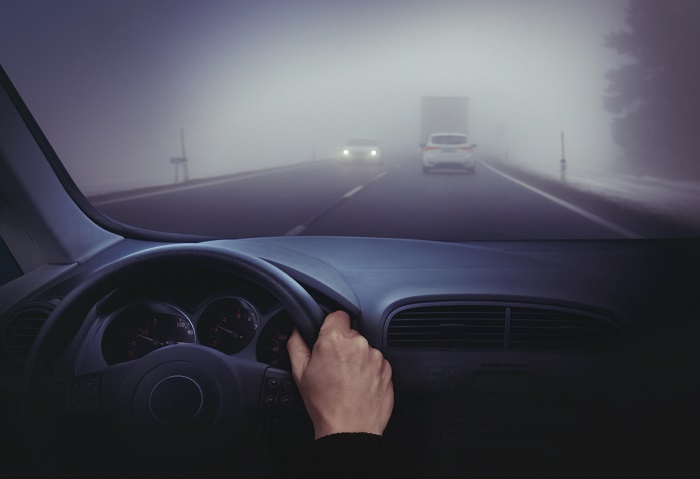
Few driving environments test a motorist’s nerves quite like a wall of dense fog. Unlike heavy snowfall or a torrential downpour, which announce their presence with immediate noise and motion, fog creeps in quietly. It creates a surreal visual vacuum that strips away familiar reference points, distorts depth perception, and tricks the brain into misjudging speed. In a matter of seconds, an open interstate or familiar country two-lane road can transform into a disorienting, high-risk corridor.
Driving safely through fog demands far more than simply slowing down. It requires a deliberate shift in how you use your vehicle’s lighting, where you direct your gaze, and how you interpret sensory cues. The following practical strategies will help you navigate low-visibility conditions with confidence and get to your destination safely.
Master Your Lighting: Low Beams and Fog Lights Only
The most common and dangerous mistake drivers make in fog is flicking on their high beams. While high beams work wonders on clear, dark rural roads, they have the exact opposite effect in fog. Fog is not merely thick air; it is a suspension of microscopic water droplets hovering above the ground. When your high beams hit these droplets, the light bounces directly back into your eyes—a blinding phenomenon known as backscatter.
To maintain maximum visibility, keep your headlights on low beam. Low beams angle their illumination downward toward the road surface, minimizing reflection and illuminating the asphalt beneath the vapor bank.
If your vehicle comes equipped with dedicated fog lights, turn them on. Front fog lights sit lower on the front bumper and cast a wide, bar-shaped beam designed to cut beneath the fog layer and highlight the road edges. Rear fog lights, which are standard on many European vehicles and increasingly common in American models, illuminate a bright red beacon that helps drivers approaching from behind spot your vehicle much sooner.
Remember to switch off your fog lights once visibility clears, as their intensity can cause glare for other motorists in clear weather. Also, do not rely on automatic Daytime Running Lights (DRLs). In many modern vehicles, DRLs light up only the front of your car, leaving your taillights completely dark. Manually turn your headlight switch to the “on” position so that your rear markers are fully illuminated.
Regulate Your Speed and Double Your Following Cushion
Fog produces a dangerous sensory illusion: when peripheral visual markers like trees, guardrails, and buildings disappear, your brain tends to underestimate how fast you are traveling. A driver cruising at 55 mph may feel like they are doing 35 mph simply because the visual flow past their side windows has evaporated.
Keep a regular eye on your speedometer rather than trusting your internal sense of pace. Match your speed to your sight distance. As a baseline rule, you should always be able to bring your vehicle to a complete stop within the visible distance you can see ahead. If you can only see two car lengths in front of your bumper, traveling at highway speeds makes an unavoidable collision virtually guaranteed if an obstacle appears.
Simultaneously, expand your following distance. On dry, clear pavement, a following interval of three to four seconds is standard. In patchy or dense fog, extend that gap to six or eight seconds. This extra buffer gives you the reaction time necessary to handle sudden braking from vehicles ahead, erratic maneuvers, or stopped traffic.
Use Road Markings as Your Visual Guide
Staring straight into the gray void looking for oncoming headlights or taillights strains your eyes and quickly leads to highway hypnosis. It can also cause you to subconsciously drift toward the center of the road.
Instead of gazing directly forward into the whiteout, cast your eyes downward toward the right side of the pavement. Use the white fog line—the solid line marking the right shoulder—as your primary navigation anchor. This line provides a steady visual guide that keeps your vehicle centered in your lane and away from oncoming traffic.
Avoid the temptation to fixate on the taillights of the vehicle ahead of you. Following another car’s red lights creates a false sense of security. If that driver misses a curve, brakes erratically, or drifts off the shoulder, you are likely to mimic their trajectory before your brain registers their mistake. Maintain your own lane positioning using the right-side pavement markers.
Eliminate Cabin Distractions and Listen to the Road
When your vision is severely compromised, your sense of hearing becomes your most valuable secondary asset. Many motorists treat fog simply as a visual inconvenience while keeping music playing or chatting on hands-free calls, but driving through low visibility demands complete focus.
Turn off the radio, podcast, or audio system entirely. Ask passengers to remain quiet while navigating thick fog pockets. Crack your driver-side window down an inch or two, particularly when approaching stop signs, intersections, or railroad crossings. Opening the window allows you to hear the rumble of approaching semi-trucks, screeching tires, train horns, or emergency sirens long before their flashing lights penetrate the haze.
Inside the vehicle, dim your dashboard illumination. Bright modern touchscreen displays and luminous instrument clusters reflect off the interior windshield glass, creating an internal glare that forces your pupils to constrict and further hampers your ability to see outside.
Manage Windshield Moisture and Cabin Condensation
Dense atmospheric fog is frequently accompanied by cool temperatures and high humidity, which causes moisture to rapidly collect both on the exterior and interior surfaces of your glass.
Activate your windshield wipers on an intermittent setting to clear the thin film of moisture that settles on the outside glass. To address interior fogging, run your vehicle’s defroster with the air conditioning (A/C) button activated. The air conditioning system acts as a dehumidifier, stripping moisture from the air before blowing it across the glass. Set the ventilation system to draw in fresh exterior air rather than running on recirculate, which merely traps humid breath inside the cabin and worsens condensation.
Know When to Pull Over and How to Do It Right
There is no shame in acknowledging when conditions have deteriorated beyond safe operating limits. If the fog becomes so dense that you cannot clearly distinguish lane markings or see more than a single car length ahead, the safest decision is to stop driving.
However, stopping incorrectly on a fog-shrouded roadway is exceptionally hazardous. Never stop your vehicle directly in a travel lane, and avoid pulling halfway onto a narrow highway shoulder. An approaching driver may mistake your vehicle for active traffic or fail to see you until it is too late.
Look for a safe exit off the highway entirely. Pull into a well-lit gas station, rest stop, hotel driveway, or shopping center parking lot. If an exit is not available and you must pull over on the road, follow these critical steps:
-
Signal early and pull your vehicle completely off the pavement, as far onto the right shoulder or grassy berm as safely possible.
-
Put the transmission in Park and set the emergency parking brake.
-
Turn off your headlights, but turn on your hazard lights (four-way flashers). Turning off your headlights prevents following motorists from mistaking your parked car for a moving vehicle in an active travel lane and rear-ending you.
-
Keep your seatbelt fastened while waiting inside the vehicle for conditions to improve.
Patience is the defining attribute of a skilled driver in severe weather. Fog almost always burns off or shifts with changes in morning sun, temperature, or wind. Giving yourself permission to wait out the worst of it is always preferable to gambling with limited visibility.
