5
Internal combustion engines operate in an environment of controlled violence. Fuel detonates inside metal cylinders thousands of times per minute, producing temperatures exceeding four thousand degrees Fahrenheit at the core of the combustion chamber. Only about a third of that energy transforms into the kinetic motion that turns your wheels. The rest dissipates as waste heat, and managing that thermal load falls squarely on the cooling system. Designed to keep an engine operating within a narrow window—typically between 195 and 220 degrees Fahrenheit—this network of fluid passages, radiators, and mechanical pumps is your vehicle’s first line of defense against catastrophic mechanical failure.
When the cooling system stumbles, the consequences are immediate and severe. Aluminum cylinder heads warp, pistons expand beyond cylinder clearances, and head gaskets rupture under thermal stress. Recognizing the early symptoms of cooling failure and understanding the boundary between a simple driveway check and a job requiring a professional bay can mean the difference between replacing a fifty-dollar hose and purchasing a five-thousand-dollar replacement engine.
Low Coolant and Vanishing Pressure: Tracking Down Leaks
A healthy cooling system is a closed, pressurized circuit. Under normal operating conditions, coolant should not disappear. If you find yourself topping off your expansion reservoir every few weeks, fluid is escaping somewhere, and finding that path is the first priority.
External Leaks from Hoses, Radiators, and Water Pumps
External leaks are the most common source of fluid loss, and they often leave physical evidence behind:
-
Degraded Radiator Hoses: Years of heat cycling, engine vibration, and exposure to oil soften rubber hoses from the inside out. A hose can develop internal delamination, pinhole punctures, or cracks near the clamp connections, spraying atomized coolant under driving pressure that leaves dried, chalky white or green crust on surrounding components.
-
Cracked Radiator End Tanks: Modern radiators feature aluminum cooling cores bonded to molded plastic end tanks. Over tens of thousands of miles, the plastic turns brittle from constant expansion and contraction, developing hairline fractures along the crimped seams that leak fluid under operating pressure.
-
Water Pump Weep Holes: The water pump uses an internal mechanical seal to keep pressurized coolant away from the shaft bearings. When that seal begins to degrade, coolant drips out through an engineered drainage opening called a weep hole. A wet or stained weep hole is an unmistakable warning that the water pump bearings are near the end of their service life.
The Overlooked Pressure Cap
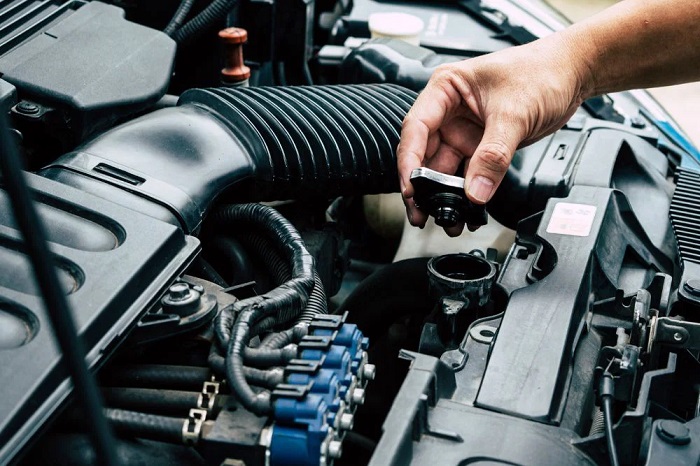
Not all leaks drip onto the driveway. The cooling system depends on a specialized radiator or expansion tank pressure cap to raise the boiling point of the water-antifreeze mixture. Every pound of pressure added to the system increases the boiling point by approximately three degrees Fahrenheit, allowing the engine to run hotter and more efficiently without vaporizing the fluid.
The pressure cap contains a calibrated spring and rubber sealing gasket designed to hold a specific pressure, typically fourteen to sixteen pounds per square inch. If the internal spring weakens or the rubber gasket hardens, the cap vents prematurely into the overflow bottle or directly into the engine bay as steam. The boiling point plummets, localized boiling occurs around the combustion chambers, and the engine overheats even though the dashboard shows an adequate volume of liquid in the tank.
Thermostat Malfunctions: Stuck Open Versus Stuck Closed
Tucked inside a housing where the upper or lower radiator hose meets the engine block sits the thermostat. This small mechanical valve contains a sealed cylinder of specialized wax that expands as temperatures rise, pushing a spring-loaded poppet valve open to allow coolant to circulate through the radiator. When cold, the valve stays shut to bring the engine up to operating temperature rapidly.
A thermostat typically fails in one of two positions:
-
Stuck Closed: This is the most dangerous failure mode. If the wax leaks out or the internal spring seizes shut, coolant remains trapped inside the engine block, completely isolated from the cooling radiator. The temperature gauge will spike toward the red zone within five to ten minutes of a cold start, even in freezing ambient temperatures. Continuing to drive with a stuck-closed thermostat will destroy an engine in minutes.
-
Stuck Open: If the thermostat sticks open, coolant flows continuously through the radiator regardless of engine temperature. The engine takes an abnormally long time to warm up, the cabin heater blows lukewarm air during winter commutes, and the vehicle’s computer records a diagnostic trouble code (such as P0128). Running an engine chronically below operating temperature causes the engine computer to inject excess fuel, diluting engine oil, fouling spark plugs, and prematurely degrading the catalytic converter.
Circulation Obstacles: Clogged Radiators and Failing Fans
Even with an intact thermostat and full fluid levels, cooling systems fail if the mechanisms responsible for shedding heat break down.
Internal Silt and External Clogging
Neglecting routine coolant flushes leads to chemical degradation of the rust inhibitors within the antifreeze. As the fluid turns acidic, it causes galvanic corrosion, peeling microscopic metal flakes from the engine block and producing mineral scale. This debris settles in the narrow, flattened passages of the radiator core, creating cold spots and restricting total fluid circulation.
Simultaneously, the exterior of the radiator must receive unimpeded airflow. Leaves, road grit, and insects pack into the delicate aluminum fins over time. Furthermore, if road debris bends the fins flat, air cannot pass through the core, drastically diminishing the radiator’s heat-exchange capacity at highway speeds.
Electric Cooling Fan Failures
When a vehicle is traveling down the highway at fifty-five miles per hour, natural air movement forced through the front grille provides sufficient cooling. However, when idling in city traffic or navigating a drive-through, airflow drops to zero. This is where the electric cooling fan takes over.
If your temperature gauge remains rock-steady on open highways but climbs steadily toward the red mark the moment you stop at a red light, your electric cooling fan or its control circuitry is likely malfunctioning. A failed fan motor, a blown thermal fuse, a corroded relay, or a faulty coolant temperature sensor can prevent the fan blades from spinning when the engine bay needs forced air the most.
Internal Leaks and Head Gasket Failure
The most severe cooling system issue involves an internal breach, where coolant escapes into areas where it does not belong. The engine’s cylinder head gasket acts as a high-pressure seal between the engine block and cylinder head, keeping combustion gases, engine oil, and liquid coolant running in separate, dedicated channels.
When an engine overheats—even briefly—the aluminum cylinder head expands at a faster rate than the cast-iron or aluminum engine block. This uneven thermal expansion pinches and tears the head gasket, or warps the mating surface of the head itself.
Once compromised, internal cross-contamination begins:
-
Coolant in the Combustion Chamber: Coolant is sucked into the cylinders on the intake stroke, producing thick, billowing white exhaust smoke that carries a distinctly sweet aroma.
-
Exhaust Gases in the Cooling Passages: High-pressure combustion gases force their way into the cooling jackets, over-pressurizing the system, blowing off radiator hoses, and causing the coolant reservoir to violently bubble like a boiling kettle.
-
Coolant in the Lubrication System: Coolant slips past oil drain galleys and mixes with engine oil. Checking the underside of the oil filler cap or inspecting the oil dipstick will reveal a thick, yellowish-brown emulsion resembling melted chocolate milkshake. Coolant destroys the lubricating properties of motor oil, leading to wiped crankshaft bearings and total engine seizure if the vehicle is driven.
When to Seek Professional Repair
While checking fluid levels, replacing a worn radiator cap, or clearing dead leaves from the front condenser can be handled in a home driveway, advanced cooling diagnosis and repair demand specialized equipment and precision skills.
You should bypass home experimentation and bring your vehicle to a certified technician under the following circumstances:
-
The Engine Has Overheated to the Redline: If your temperature warning light has illuminated or steam has escaped from beneath the hood, shut down the engine immediately and call a tow truck. Do not attempt to drive the car to a shop. A technician must perform a cylinder leak-down test, check cylinder head flatness with a precision straightedge and feeler gauges, and inspect the cooling passages for structural cracks.
-
Mysterious, Unlocatable Fluid Loss: When fluid levels drop but no puddles appear beneath the car, a professional will use a cooling system pressure tester to pump the cold system up to operating pressure and monitor the gauge for pressure decay. They will also deploy a chemical block tester—an instrument that uses blue testing fluid that turns yellow when exposed to combustion gases inside the radiator neck—to verify whether a head gasket breach exists.
-
Component Replacements Requiring Air Bleeding: Modern automotive cooling systems are intricately routed, often sitting lower than the vehicle’s interior heater core or throttle body lines. Replacing a water pump, radiator, or heater core introduces deep air pockets into the system. These airlocks prevent coolant from circulating and create hot spots that crack cylinder heads. Professional shops use pneumatic vacuum-fill tools that pull a deep vacuum on the entire engine block before drawing fresh fluid in, ensuring zero trapped air remains in the passages.
An automobile’s cooling system is an interconnected pressure vessel that tolerates no shortcuts. Paying close attention to subtle warning signs—an unexpected whiff of sweet syrup after parking, an electric fan that fails to engage, or a dashboard temperature needle that drifts higher than usual—gives you the power to intervene early. Treating cooling maintenance with discipline and calling in professional diagnostic tools when internal breaches or circulation issues arise protects your vehicle’s mechanical heart and guarantees your engine runs cool for miles to come.
