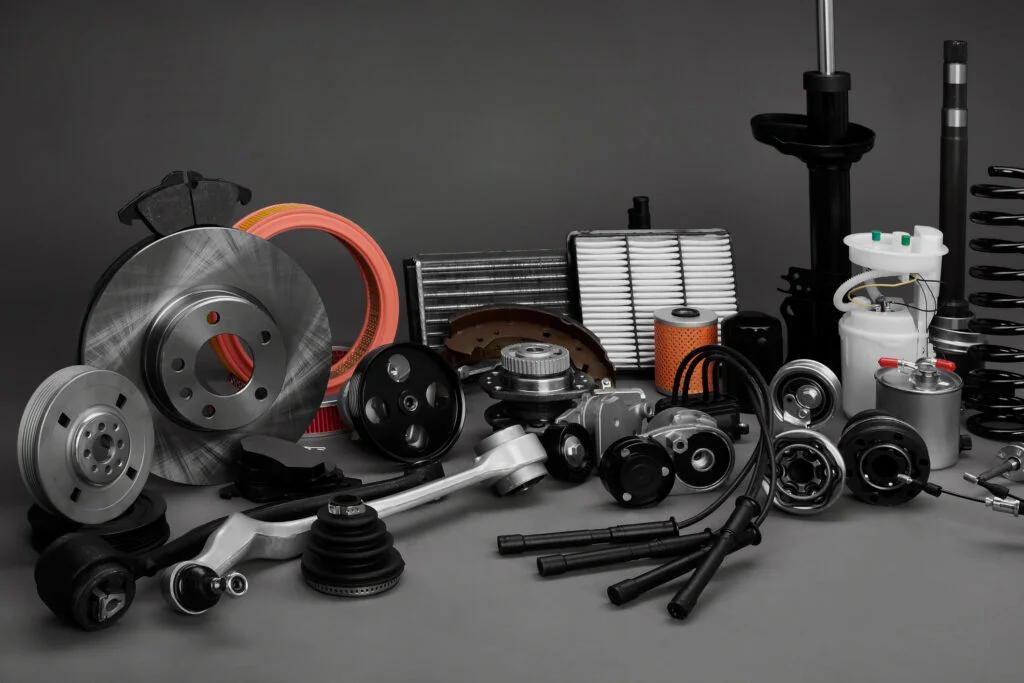
The automotive industry has entered a new era of precision engineering, where additive manufacturing (AM) — more commonly known as metal 3D printing — is reshaping how high-performance auto parts are designed, produced, and optimized. Far from being a prototyping novelty, additive manufacturing is now driving real-world performance advantages in engine components, suspension systems, and brake assemblies. Among these innovations, additively manufactured metal turbine wheels, manifolds, and structural brackets are redefining what’s possible in modern automotive engineering.
Understanding the Shift: From Machining to Metal Additive Manufacturing
Traditional metal fabrication techniques — such as casting, forging, and CNC machining — rely heavily on subtractive or mold-based methods. While effective, these methods impose design and material constraints, leading to inefficiencies in both performance and production speed.
Additive manufacturing, on the other hand, builds components layer by layer using high-powered lasers or electron beams to fuse metal powders. This allows for:
-
Complex geometries previously impossible with casting.
-
Material optimization, where density and strength can be strategically varied within a part.
-
Weight reduction without compromising rigidity or durability.
-
Rapid design iteration, enabling faster R&D cycles for performance testing.
For automakers and motorsport engineers, these benefits are not just theoretical — they translate directly into faster vehicles, better cooling, and longer component life.
Metal Additive Manufacturing in Auto Parts: Beyond Prototyping
Additive manufacturing first entered the automotive scene as a prototyping tool, allowing designers to visualize and test components before committing to expensive tooling. However, advances in metal powder alloys, printing precision, and post-processing techniques have enabled large-scale production of end-use parts.
Key Auto Components Using Metal Additive Manufacturing
-
Turbocharger Turbine Wheels
Traditional turbine wheels are limited by the geometry achievable through casting. With AM, engineers can create optimized aerodynamic blade profiles, resulting in:-
Higher boost pressure response
-
Reduced turbo lag
-
Enhanced heat resistance through novel alloys like Inconel and titanium
-
-
Exhaust Manifolds
Metal 3D printing allows engineers to integrate internal cooling channels and complex runner paths, reducing backpressure while maintaining structural integrity at high exhaust temperatures. -
Brake Calipers
Additively manufactured aluminum brake calipers — such as those used in high-end sports cars — combine lightweight construction with exceptional stiffness, improving both braking efficiency and heat dissipation. -
Suspension Components
Lightweight titanium parts created through AM processes can handle high tensile loads with reduced unsprung mass, leading to improved vehicle dynamics and cornering precision. -
Engine Pistons and Cylinder Heads
Porsche and other performance manufacturers have experimented with AM pistons featuring integrated cooling galleries, increasing power output while reducing weight.
Engineering Advantages That Transform Performance
The power of AM lies in its design freedom and functional integration. Engineers can now consolidate multiple parts into a single printed component, reducing assembly complexity and failure points.
1. Topology Optimization
Using computational algorithms, designers can simulate load paths and stress distributions, removing unnecessary material while maintaining strength. This optimization, when paired with AM, produces highly efficient organic structures that mimic nature’s own engineering.
2. Integrated Cooling Channels
In performance vehicles, thermal management is critical. AM enables internal lattice structures and coolant pathways that enhance heat dissipation in turbochargers, brakes, and power electronics.
3. Material Efficiency
Additive manufacturing uses only the material required to create the part, minimizing waste and cutting down costs associated with expensive metals such as titanium or nickel alloys.
4. Rapid Iteration and Customization
Racing teams and performance brands benefit from on-demand part customization, allowing them to adjust designs for different tracks, conditions, or vehicle models — all without retooling costs.
Challenges in Scaling Additive Manufacturing for Auto Parts
While metal AM offers undeniable advantages, it also faces significant barriers before full mainstream adoption.
-
Production Speed: Layer-by-layer printing is slower than casting or stamping, making it less viable for mass-market vehicles.
-
Cost of Metal Powders: High-grade alloys like Inconel or titanium powder remain costly.
-
Post-Processing Requirements: Printed parts often require heat treatment, surface finishing, and machining to meet performance standards.
-
Quality Assurance: Maintaining dimensional accuracy and microstructural consistency across batches is crucial, especially for safety-critical parts.
Despite these challenges, continuous advancements in multi-laser systems, automated inspection, and hybrid manufacturing (combining AM with CNC machining) are making large-scale deployment increasingly feasible.
Case Studies: Industry Leaders Pushing Metal AM Forward
Porsche’s 3D-Printed Pistons
Porsche introduced additively manufactured aluminum pistons in its 911 GT2 RS, achieving a 10% weight reduction and an increase of 30 horsepower due to improved cooling flow. This success demonstrated the viability of AM in engine internals under extreme conditions.
Bugatti’s Titanium Brake Caliper
Bugatti’s titanium brake caliper is another milestone — printed in a single piece using selective laser melting (SLM). It’s 40% lighter than its aluminum counterpart while maintaining greater stiffness, capable of withstanding pressures up to 125 bar.
General Motors’ Lightweight Brackets
GM uses generative design combined with AM to develop structural brackets that are 20% lighter and 40% stronger than traditionally machined ones. These parts are already being integrated into next-generation electric vehicles.
The Future: Additive Manufacturing in Electric and Autonomous Vehicles
As the industry shifts toward electrification and autonomy, AM will play a pivotal role in reducing vehicle weight, improving battery performance, and enhancing cooling systems.
-
Battery Cooling Plates: Additively manufactured copper or aluminum plates with integrated microchannels for optimized thermal regulation.
-
Motor Housings: Lightweight yet durable enclosures that integrate complex geometries for noise and vibration reduction.
-
Sensor Mounts and Frames: Highly precise, corrosion-resistant metal mounts for LiDAR and radar components.
The flexibility of AM aligns perfectly with the modular nature of EV platforms and the need for rapid design iteration in a fast-evolving market.
Environmental and Sustainability Implications
Additive manufacturing also supports sustainability goals:
-
Reduced waste material, since only the required volume is used.
-
Lower energy consumption compared to casting and forging.
-
Localized production, minimizing logistics emissions.
-
Recyclable metal powders, enabling a more circular manufacturing ecosystem.
For automakers aiming to meet carbon neutrality targets, these attributes make AM not just a technological advantage but an environmental imperative.
Conclusion
Additive manufacturing of metal auto parts is no longer an experimental process — it’s a strategic differentiator for manufacturers seeking cutting-edge performance, sustainability, and customization. From lightweight turbine wheels to integrated cooling pistons, the evolution of metal AM is redefining how vehicles are designed and built. As the technology matures, its integration into both performance and mainstream vehicles will mark a fundamental transformation in automotive engineering.
Frequently Asked Questions (FAQs)
1. What metals are commonly used in additive manufacturing for auto parts?
Common materials include titanium alloys, aluminum alloys, stainless steel, Inconel (nickel-chromium), and cobalt-chrome, each selected based on strength, heat resistance, and weight requirements.
2. How does additive manufacturing improve turbocharger efficiency?
By enabling complex internal geometries and smoother airflow paths, AM-designed turbine wheels reduce turbo lag and enhance pressure response.
3. Can AM replace traditional manufacturing entirely in the auto industry?
Not entirely — while AM is ideal for high-performance and low-volume parts, traditional methods remain more efficient for mass production.
4. Are additively manufactured parts as strong as forged parts?
With proper post-processing, additively manufactured metals can match or even exceed the mechanical strength of forged components, depending on the alloy and print parameters.
5. What are the cost implications of using AM in automotive production?
Currently, AM is more expensive than casting or machining due to material and machine costs, but this is offset by weight savings, part consolidation, and design efficiency.
6. How does AM contribute to vehicle sustainability?
AM reduces waste, supports local production, and allows for lightweight vehicle designs that improve fuel efficiency or battery range.
7. What’s next for AM in automotive applications?
Expect growth in electric vehicle cooling systems, structural integration, and hybrid manufacturing, blending AM with traditional machining for large-scale, durable components.
